Case Study: Letters of Kindness, Ermitage International School, France
When Tania Ambridge took on the role of Round Square Coordinator at Ermitage International School in France, she made a deliberate choice early on: the students would be in charge. What followed was not a complex programme or a calendar full of meetings, but a series of small, thoughtful acts of kindness and the quiet courage it takes to step forward, take responsibility and be heard.
“I started the Round Square Student Committee a couple of years ago when I first joined the post,” she explains. “I’ve basically told them that they’re in control. They need to decide what they want to do.”
What followed was not a complex programme of meetings or a heavily scaffolded service plan, but a series of student-led initiatives rooted in simplicity, empathy and ownership, supported by a remarkably low-level of staff input.
A student idea, owned from start to finish
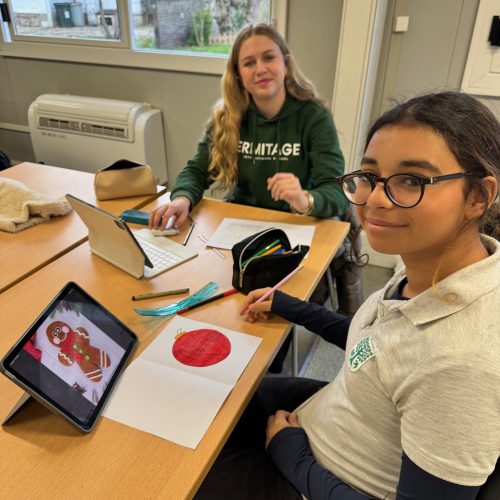
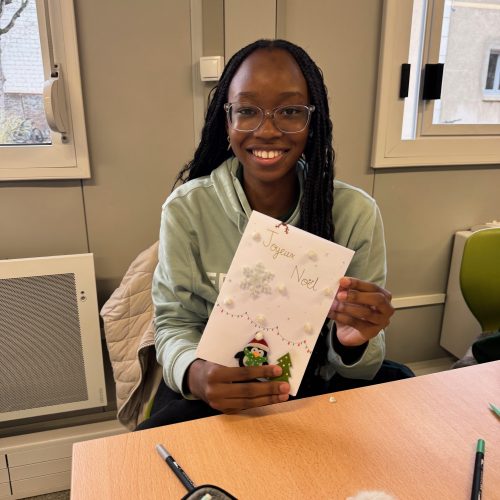
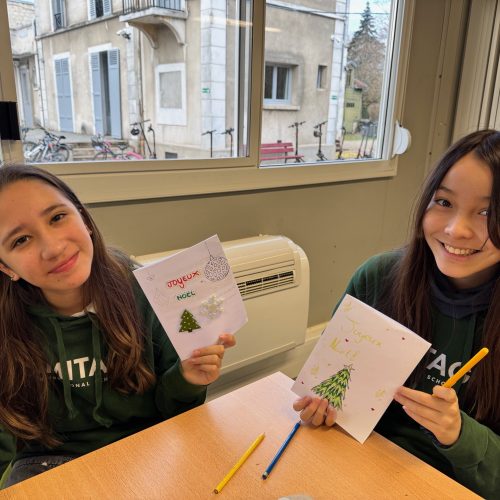
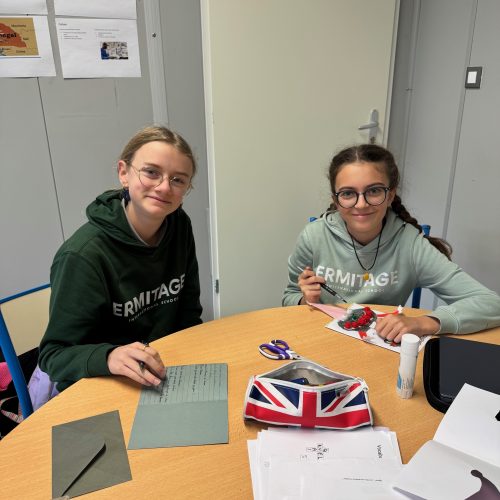
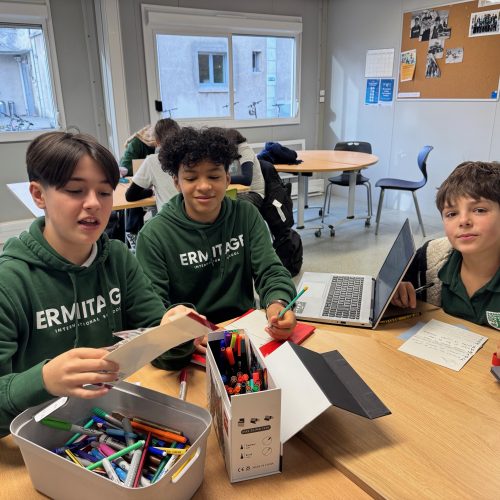
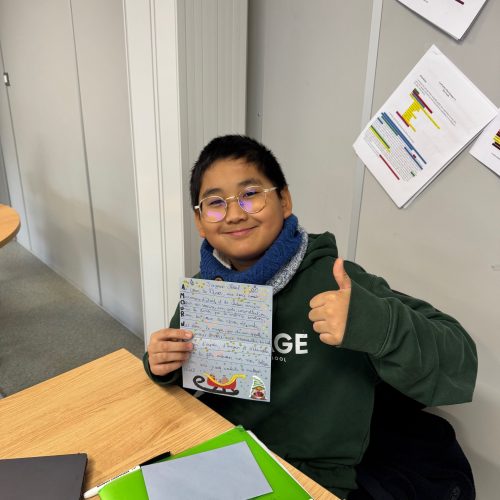
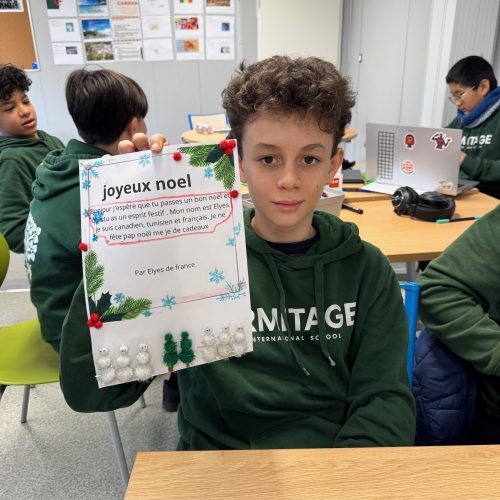
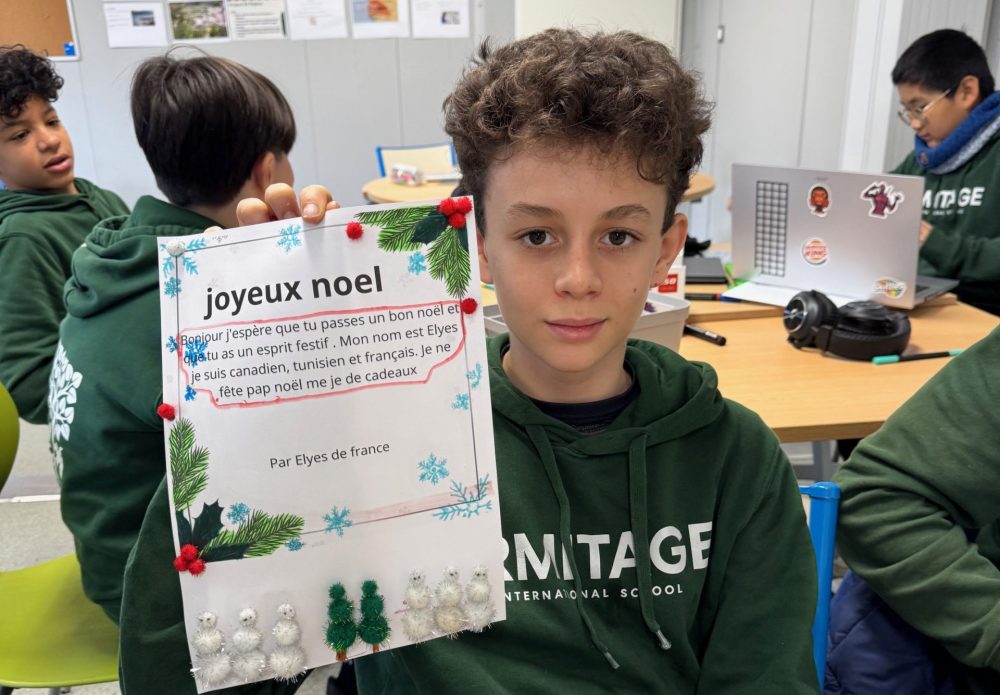
The committee’s first major initiative was entirely student-generated: writing letters of kindness to elderly residents in local care homes in and around Maisons-Laffitte.
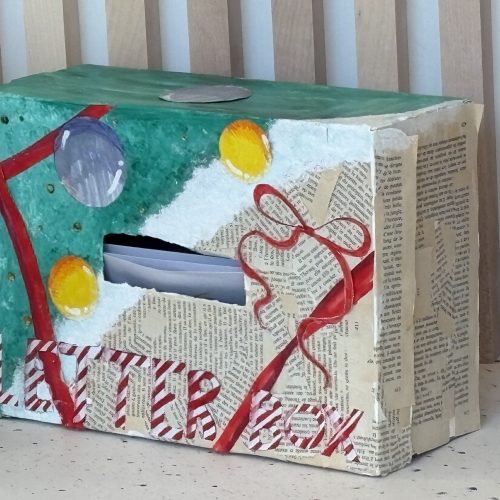
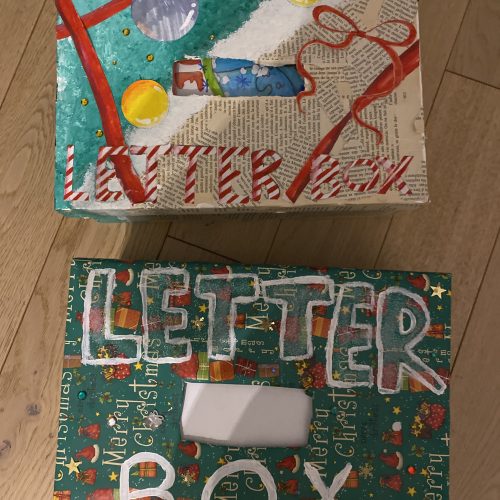
“They were very aware that Christmas can be a lonely time,” Tania says. “So it was totally their idea to put boxes around the school — primary, secondary, everywhere — to encourage people to write letters.”
In the first year, around 70 letters were collected. The following year, that number rose to 132. Students didn’t just gather the letters; they sourced names from the care homes, addressed envelopes individually and delivered them in person as a group.
Tania’s role was intentionally minimal. “I really am just the old nag in the background,” she says. “They ran the homes past me, I said start small and that was it. They delivered everything themselves.”
For students like Amelie, the experience was both practical and deeply human:
“I gained a beautiful experience of spreading joy to the elderly and also organising the project with all of the RS members. Everybody played a very important role… I also learned that it doesn’t take much to make someone’s day.”
For the students, kindness became tangible, not an abstract idea, but something that had been received, appreciated and acknowledged by real people.
Leadership without forcing a mould
One of the most striking outcomes has been the growth in student confidence, particularly among those who might not naturally put themselves forward.
This year, the committee opted for joint leadership rather than a single chair. “They’re quite a shy group,” Tania reflects. “Two girls who I know are really dynamic, but they didn’t see themselves that way.”
Rather than imposing a traditional structure, Tania supported their proposal to lead together. The result has been transformational. The students now manage communications, oversee Google Classroom, run decision-making processes and coordinate projects with minimal adult input.
“I’ve seen them go from being very timid to just running everything,” she says. “I’m sitting back thinking, this is fabulous.”
For Niko, stepping into leadership brought both challenge and meaning: “It genuinely felt nice and meaningful. The tricky bit was getting started and finding time, but working together made everything so much easier. It reminded me how much small, thoughtful gestures can matter.”
That confidence has extended beyond the committee. One student who Tania “would never have expected” to take part in wider Round Square activity has since signed up for an international conference. “She said she’s really enjoyed the whole ethos,” Tania notes. “That, for me, says everything.”
Bake sales, real learning and real-world skills
Alongside service initiatives, the committee runs regular bake sales to support charities chosen by the students. Again, the model is intentionally straightforward.
“Bake sales are very easy,” Tania says. “If you’ve got students who are happy to bake, you’ve always got students who are happy to eat.”
What elevates the activity is the level of student responsibility. They manage marketing, budgeting, baking, sales and reflection. They run an Instagram account, design posters and appoint a treasurer. When things go wrong, they learn from it.
Laurene reflects candidly on the challenges: “At the beginning, the bake sales weren’t advertised enough, so people wanted to buy something but hadn’t brought money. Another problem was finding the right balance between too much food and not enough.”
These moments became learning opportunities rather than failures. “They learn what real work looks like,” Tania explains. “Marketing, money, production, selling — it’s all there.”
Ellie highlights the personal impact: “Working towards a common goal and taking on new responsibilities helped me develop more confidence and independence.”
Trust as the catalyst
Underlying everything is trust and the courage to use it. For these students, kindness is not a one-off act but a habit, built through small decisions, shared responsibility and the confidence to step forward.
“There’s always that moment where they ask, ‘Is it really our decision?’” Tania says. “And I keep showing them that yes, it is.”
In a context where students are used to being independent but not always empowered, that message has been transformative.
“They’re not enjoying the power,” she reflects, “they’re enjoying the fact that their voice is heard and acted upon.”
For schools considering how to embed Round Square ethos without adding layers of complexity, this story offers a clear alternative: start small, step back, and let students lead.
Four things to consider when organising your Round Square Student Committees
1. Hand over real ownership early
From the outset, make it explicit that ideas, decisions and direction sit with students, not staff.
Tania’s approach was to position herself “in the background”, allowing students to propose initiatives, select charities and determine how projects would run. Her role was limited to sense-checking and safeguarding, not shaping outcomes. This clarity reduced dependence on staff and increased student commitment, as students understood that their choices genuinely mattered.
2. Replace meetings with flexible digital communication
Avoid assuming that student leadership requires regular, in-person meetings.
In Tania’s context, long travel times and heavy academic timetables made weekly meetings unrealistic. By using Google Classroom and email as the primary coordination tools, students could contribute asynchronously, manage tasks independently and communicate efficiently. This removed a major barrier to participation for both students and staff.
3. Let students design leadership roles that fit them
Resist imposing a fixed committee hierarchy or leadership model.
When students expressed discomfort with a single leader role, Tania supported a joint leadership arrangement. This flexibility enabled quieter students to step forward in ways that felt manageable and safe, resulting in noticeable growth in confidence and capability over time.
4. Trust students with real decisions and visible consequences
Give students responsibility for decisions that have tangible outcomes, including budgets, priorities and timelines.
Whether deciding how to allocate funds, responding to unexpected needs or learning from underperforming bake sales, students were trusted to debate, decide and adjust. Tania reinforced this trust by repeatedly affirming that decisions were genuinely theirs, helping students move past initial hesitation and into confident action.