
60 for Sustainability Picnic – VidyaGyan School, Bulandshahr
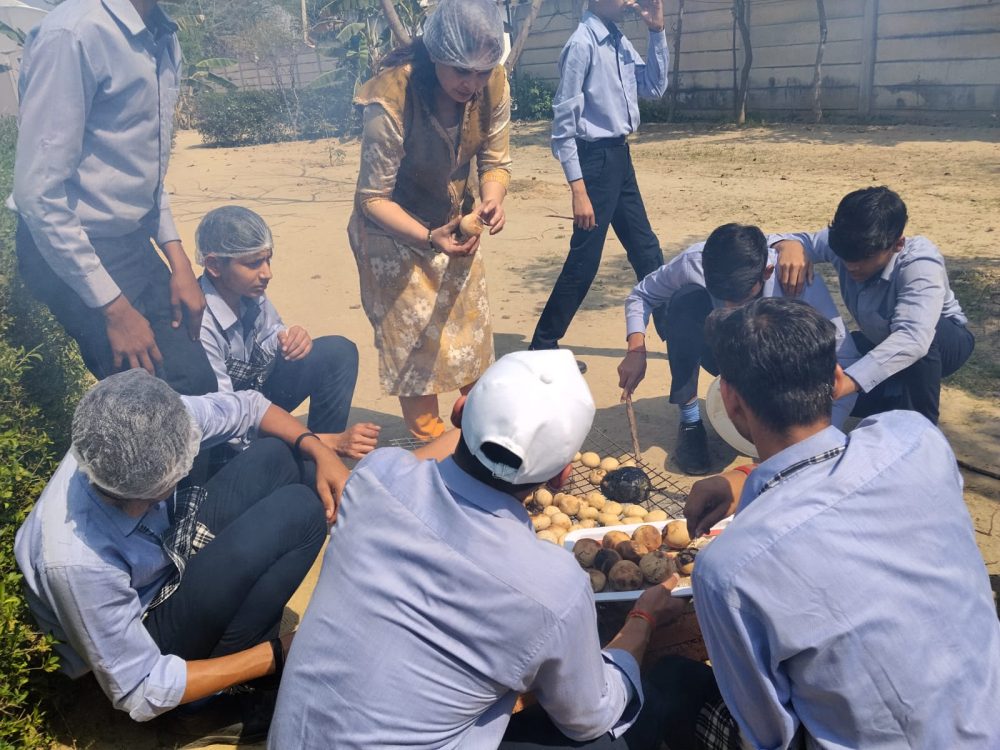
VidyaGyan School, Bulandshahr in India has placed student leadership and environmental responsibility at the heart of its learning this year through a thoughtful and joyful Zero‑Waste Picnic, designed and delivered by the VidyaGyan Environment Club in collaboration with Moolgyan Kitchen. The experience brought together 45 students, teachers, and farm staff, creating a lively and purposeful community of 60 participants.
The focus for the day was to understand sustainability as a habit. Students explored recycling, responsible consumption, and the 5R principles—Refuse, Reduce, Reuse, Repurpose, and Recycle—through practical activities and shared reflection.
Students Leading Through Action
From the outset, students took the lead in maintaining a clean, waste‑free environment. They encouraged one another, watched their habits closely, and supported their peers in separating materials correctly.
Alok, a Grade 8 student, described the experience: “We reminded each other not to use plastic and to keep the place clean. Some of us helped others in separating waste properly. Everyone worked as a team, and it felt nice to take responsibility.”
The picnic unfolded across the farm, where students prepared food, ate together, and experienced the value of fresh, locally grown produce. The farm‑to‑table moment proved especially significant.
Shweta, a Grade 6 student, reflected: “When we plucked salad and ate food from the farm, I understood how much effort it takes to grow food. So I did not waste anything. I also learned that food waste can be turned into compost, which is useful again.”
Through these experiences, students connected sustainability with respect for resources, teamwork, and gratitude. Their deliberate choices resulted in almost zero waste, and they left the farm exactly as they found it—clean, cared for, and undisturbed.
A Model of Sustainable Learning
The day blended learning, teamwork, cooking, and reflection, creating an atmosphere that the school described as “fun on the run”. Importantly, it showed students that recycling and responsible waste management are not occasional activities but everyday practices that require awareness and collective effort. VidyaGyan School’s Zero‑Waste Picnic is a good example of how sustainability can be woven into school life in meaningful and enjoyable ways.
Looking Ahead: A Year of Creative “60s”
The Zero‑Waste Picnic is only the beginning of VidyaGyan School’s plans for the year. Students will take part in 60 hours of community service, supporting activities such as food preparation, cleaning, recycling, plantation work, housekeeping, and resource management across the school. They will also create a 60‑beat rhythmic tribute inspired by classical Indian Taal, produce a 60‑frame “One World” film montage, share friendship through 60 Plates – One World food experiences, and celebrate creativity with 60 strokes of the paintbrush. Together, these initiatives reflect the school’s commitment to service, culture, creativity, and global understanding.
As Round Square marks its 60th Anniversary, VidyaGyan School demonstrates a student‑led approach that allows schools to create their own “60”‑themed adventure in a format that suits their context and community.
What Students Learned: The 5Rs in Action
As part of the Zero‑Waste 60 for Sustainability Picnic, VidyaGyan School students explored the 5Rs of sustainable living, using them as a practical guide throughout the day. Their actions demonstrated not only environmental responsibility, but also teamwork, leadership, and thoughtful decision‑making.
- Refuse: Students chose not to bring single‑use plastics and reminded one another to avoid unnecessary items. This encouraged conscious decision‑making before waste is even created.
- Reduce: By monitoring portion sizes and sharing resources, students reduced the amount of waste produced at the picnic. They learned to take only what they needed, both in food and in materials.
- Reuse: Students used reusable containers, utensils, and water bottles. They also repurposed items at the farm for games and activities, demonstrating creativity and resourcefulness.
- Repurpose: Through hands‑on tasks, students found new uses for leftover materials—turning food scraps into compost and rethinking how everyday items can have a second life.
- Recycle: Recycling was a central focus, and students worked together to separate waste correctly. As Alok shared, “Everyone worked as a team, and it felt nice to take responsibility.” This collective effort contributed significantly to the picnic’s near zero‑waste outcome.