
GEN ALPHA TEENS EXPECT GENDER EQUALITY IN THEIR LIFETIME SAYS GLOBAL STUDY ACROSS 20 COUNTRIES
A global study conducted by International Education Charity, Round Square, has found that 79% of Gen Alpha teens (<16 years) believe that gender equality will be achieved in their lifetime.
Confidence levels vary between countries, with the most optimistic responses from students and teachers coming from Rwanda, Colombia, Chile and South Africa, where more than 80% across all groups believe that equality is within reach. Less confident were students and teachers in the UAE, Canada, France and Germany, where just under 50% of respondents expected to see true equality in their lifetime.
As a student from Canada says “If 100% is a perfect world where gender equality has been reached, then I believe our current progress lies just over 60%. Poor treatment of women is still highly normalized in countries across the world, especially for those living below the poverty line.”
Ahead of International Women’s Day 2026 on 8 March, with the theme Give To Gain, Round Square’s study invites students and teachers to consider some of the barriers to women’s equality, and what collaborative action they can take to accelerate positive change and advancement for all. It explores the power of reciprocity and support, and an understanding that when women thrive, we all rise.
In her survey response, a student from Chile sums up this sentiment: “I believe gender equality benefits everyone, not just women. More equal societies tend to have stronger economies, greater social stability, and better overall well-being. I also think cultural change is the most challenging part, because it requires shifting long-standing attitudes and social norms.”
“It is vital that we highlight that the theme of International Women’s Day this year hones in on the theme ALL as there continues to be a gap in equality of rights between men and women in all nations,” says Martha Perry, Principal of St. Clement’s School in Toronto, Canada. “As a girls’ school, International Women’s Day is a wonderful time in which to celebrate and call our students to action. As any school – girls, boys or co-ed – it is also time in which to call people to action to ensure that we can close the gap on gender equality.”
UNFAIR EXPECTATIONS SEEN AS GREATEST BARRIER TO GENDER EQUALITY
The study found that the top two perceived barriers to gender equality are surprisingly consistent across all countries, genders and ages, with the greatest obstacle believed to be “unfair expectations or stereotypes of what women and girls can or should do”, closely followed by “feeling unsafe online, in homes, schools, or workplaces”.
On the question of online safety, a female student from Canada says, “since the development of AI and other internet sources, the sexualisation of women has just increased, the amount of catcalling, messages about sexualising people in my age demographic is vile, we are still children, and it is not okay.”
Other barriers vary between respondent’s age groups, countries and cultural experiences, but can be summarized as ‘access to leadership and employment opportunities’. Students and teachers in Australia, Canada, France, Kenya, Rwanda, South Africa, Sweden, and the UAE say the issue is “too few women in leadership and decision-making”, whilst their peers in Colombia (16%), Germany (20%) and the UK cite “unequal pay and job opportunities compared to men”. In Qatar, Pakistan, India, China, Namibia, and Oman “Pressure to take on most caregiving and household chores” is viewed as the third barrier.
Students’ open responses demonstrate understanding of global inequities beyond their own countries. As one student from Australia says, “there has been a very uneven distribution of advancements made towards gender equality globally. Developing countries with limited access to education and limited, or no laws around gender equality have made less progress than first world countries that have freedom of speech, well enforced laws, and accountability. I think the biggest gap still exists in basic needs – healthcare, sanitary items, quality education. These are the pillars which we must build on to close the gap.”
CHALLENGING STEREOTYPES TO ACCELERATE POSITIVE CHANGE
When it comes to the most effective ways to bring about positive change, the top answer from girls is “challenging stereotypes and unfair expectations, through education, positive role models, inclusive messages”. Boys chose a different priority, feeling that “creating safe environments at home, school, work and online” is the most critical. All genders agree that “supporting women into a fair proportion of leadership and decision-making roles” is in the top three interventions needed for positive change.
SHARE RESPONSIBILITY FOR BUILDING RESPECT IN THE CLASSROOM
In schools, students and teachers agree that the greatest positive impact on gender equality comes from collaboration on creation of classroom rules about respect, and working together to agree norms like sharing leadership and zero tolerance for sexism.
In addition, boys feel that anti-bullying and kindness campaigns are effective in promoting respect for all genders, along with sports and physical activities that include everyone such as mixed-gender games or inclusive games that focus on teamwork, not stereotypes. Girls recommend learning about gender equality together and discussing what fairness and equality look like in everyday life, and participating together with boys in group projects with shared leadership, rotating roles and giving everyone a fair chance.
“A common, recurring, and reassuring theme is students’ understanding of their own agency in this process,” says Rachael Westgarth, Round Square’s Chief Executive. “Whilst they recognise the complexity of underlying issues are beyond their current sphere of influence, they are not waiting for big-picture policy shifts, but instead are pointing to daily, culture-building behaviours that shape who leads, who speaks, and whose voices are respected. When classrooms model fairness, anti‑sexism, and shared responsibility, within those spaces, equality becomes not an aspiration but a lived, everyday experience. These are immediate, actionable changes students believe they can influence right now.”
As a student from Rwanda says, “we will achieve equality – It’s just a matter of breaking the mindset.” This is echoed in a comment from a female student in Qatar, who says “If we learn respect and fairness here, we can change society later.”
HOW BOYS CAN BEST SUPPORT GIRLS IN SEEKING GENDER EQUALITY
Students and teachers of all genders agree that the best support boys can offer girls is to respect personal boundaries, recognising that each individual deserves control of their own body. They also agree on treating girls as equals in activities, taking turns and not assuming boys should lead. As a third approach, girls and teachers ask that boys speak up against teasing or bullying of girls, whilst boys feel that they should challenge stereotypes for all genders , for example in supporting girls who like sports, science or video games, and boys who like art, cookery, or dance.
“In my opinion, the world has made significant progress toward gender equality, especially over the last few decades,” says a student from Colombia. “One major improvement is the growing effort to challenge traditional gender stereotypes. Today, more women are pursuing careers in fields that were once dominated by men, such as politics, science, technology, and business. This shows a cultural shift in how society views women’s roles and capabilities.
HOW GIRLS CAN SUPPORT BOYS TO PROMOTE GENDER EQUALITY
When it comes to girls supporting boys’ efforts to promote equality, students of all genders agree on encouraging boys to question stereotypes and offering positive reinforcement for listening, sharing leadership, or speaking up against sexism. In addition, boys would like to be included in conversations about equality as partners rather than “problems to be fixed”, whilst girls feel their cause is best served by countering harmful norms by supporting boys in expressing emotions, accepting their vulnerability, empathy, and emotional honesty .
Whilst there are subtle differences in priorities, the responses to this question form a strikingly clear consensus: progress accelerates when boys act as everyday allies, not by grand gestures, but through consistent, peer‑to‑peer influence in the moments that shape school culture.
Through their responses to this study, students and their teachers share a clear message: Boys have a critical role to play in actively promoting equality for women. When they respect boundaries, challenge sexist jokes, share leadership, and amplify girls’ voices, they turn equality from a belief into a behaviour. As a student from India says “We men must educate our friends and family. Gender equality is a necessity upon which society should thrive.”
“I believe gender equality benefits everyone”, says Amelia, a student from Chile. “When boys are encouraged to express emotions and challenge harmful stereotypes that are present daily, it creates healthier relationships and communities. I believe most people at my age sees equality as a competition between genders, not being able to see the real objective, a collaboration. It’s important to be aware that real change happens and has a greater impact when all genders work together with respect and empathy.”
METHODOLOGY:
Round Square’s survey for International Women’s Day offers fascinating global insights, with anonymous responses from Africa, Asia, Europe, Latin America, the Middle East, and Australia. Students aged 11-19, and their teachers, were asked a sequence of multichoice questions with 10 possible answers to each, from which they selected the three that resonated most with them. Rankings are calculated using relative percentages of the number of times each option appeared in the top 3 (with the baseline comparison for each being 10%. Percentages have been rounded for clarity.
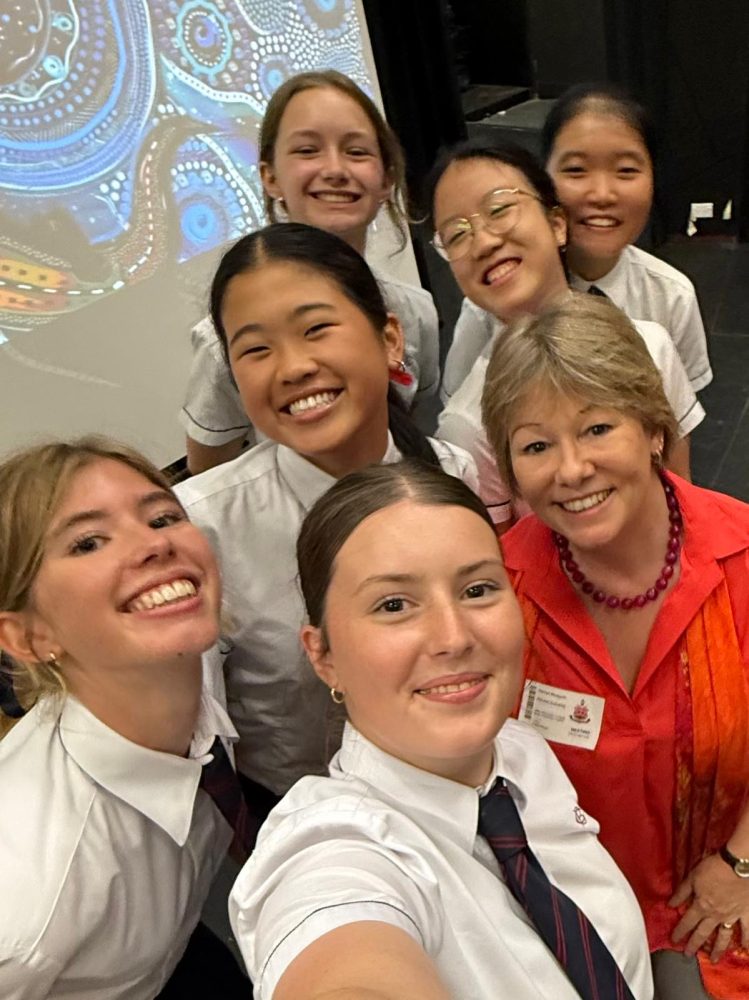
Photo: Female Leaders from Barker College’s RSIC2026 Student Executive Team