
Case Study: Happy Trivandrum – Trivandrum International School, India
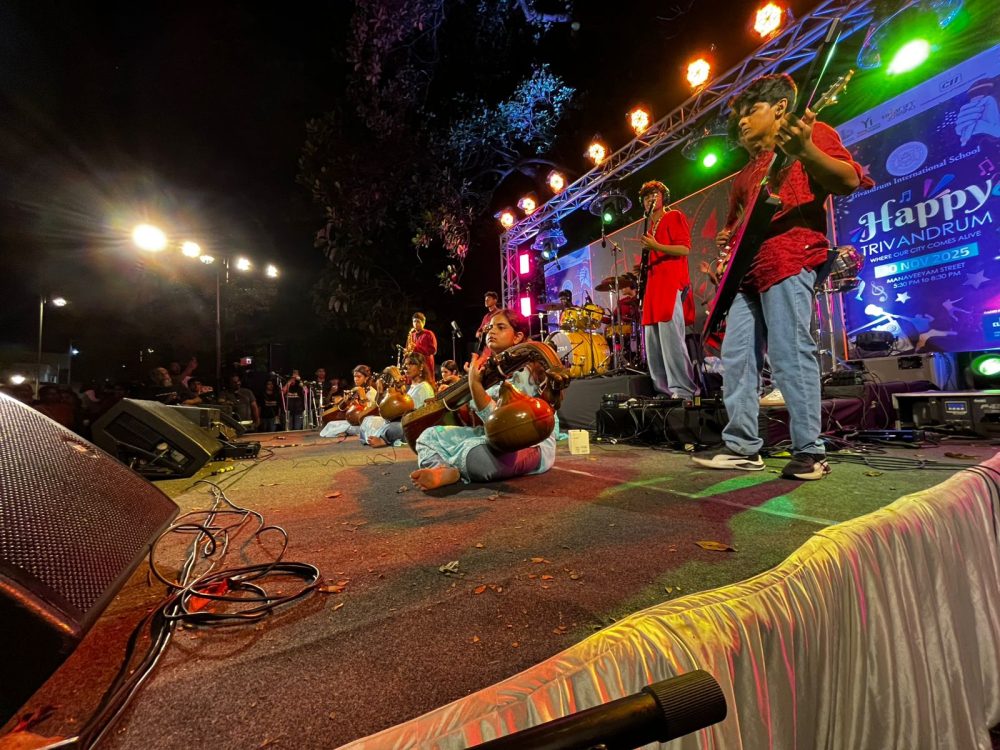
Happy Trivandrum 2025 was a student-led community street event organised by Trivandrum International School (TRINS) on the historically vibrant public street, Manaveeyam Veedhi, Trivandrum. Part of a city initiative by the District Collectorate and Young Indians, the event encouraged citizens to reconnect through arts, culture, and shared experiences in an increasingly digital world. TRINS students fully embraced this vision, leading, performing, and engaging the community, while discovering a spirit of the Round Square IDEALS beyond their school campus.
Student Leadership in Action: Planning and Delivering a Public Street Event
From the outset, students fully embraced the vision of Happy Trivandrum. Working in student-led committees, they planned and delivered every aspect of the event, from performances and logistics to crowd flow and liaison with civic authorities. This required careful time management, collaboration, and resilience as students balanced academic responsibilities alongside real-world commitments. The planning phase was demanding, but deeply rewarding. Johaan, part of the design team, reflected:
“Designing the event T-shirts while managing schoolwork was difficult, but I learned patience, teamwork, and problem-solving. I felt connected to the city in a way I never had before”.
Managing Challenges in a Real-World Environment
Students collaborated with the District Collectorate, Young Indians Trivandrum, teachers, parents, and local authorities, ensuring the event was safe, sustainable, and inclusive. Environmental awareness was evident in the responsible use of public infrastructure and materials.
Held on Manaveeyam Veedhi, the programme included a rock band, choir, instrumental ensemble, dance performances, a live dance workshop, skating demonstration, game stalls, an interactive art corner, and a street play. Every activity invited public participation, deliberately blurring the lines between performers and audience. For many students, performing and volunteering in an open public space for the first time required courage. The unpredictability of the street environment—crowd dynamics, weather, and logistical hurdles—pushed students to think on their feet. Aishwaryaa, part of the dance team, explained:
“Happy Trivandrum gave me the opportunity to connect with the community while building confidence and teamwork. I realised how quickly positivity spreads when people come together to celebrate.”
Sustaining Community Engagement Beyond a Single Event
The school itself reflected that the event successfully met its objectives, fostering strong community engagement and active public participation, with a high turnout at Manaveeyam Veedhi and a rich variety of student-led performances, workshops, and interactive stalls. Through taking real responsibility in a public setting, students developed leadership, confidence, and adaptability, tackling challenges such as team coordination, time management, and creative problem-solving.
Overall, the school observed that the most meaningful learning occurred when students were required to plan, problem-solve, and collaborate beyond familiar classroom structures, translating their skills and values into real-world action.
“We constantly learnt, we constantly evolved and I think that was a huge part of what made Happy Trivandrum a success,” says event Master of Ceremonies Christy.
Building on the success of the event, students hope to make community engagement a sustained part of school life by:
- increasing the frequency of student-led community events
- expanding student leadership roles in planning and execution
- involving younger students to ensure continuity and mentoring
- strengthening partnerships with civic bodies and local organisations.
Guidance for Schools Considering a Similar Project
TRINS suggests schools planning a community-based initiative like Happy Trivandrum may find the following practical steps helpful:
- Empower student leadership: Assign real responsibilities such as managing performances, logistics, or liaising with local authorities, and let students make key decisions. Authentic ownership encourages initiative, problem-solving, and accountability.
- Select a real-world setting: Use public or community spaces rather than the school campus. Unpredictable factors such as crowd flow, weather, and equipment logistics provide opportunities for students to develop adaptability, confidence, and teamwork.
- Provide structured support: While students should lead, ensure teachers and mentors guide planning, set deadlines, and help manage workloads. Clear roles, regular check-ins, and practical resources prevent overwhelm while maintaining student agency.
- Make reflection an integral part: Encourage students to reflect on their learning throughout and after the project. Structured reflection, through journals, debrief sessions, or presentations, helps them connect experiences to personal growth, responsibility, and the values the school wishes to foster.