
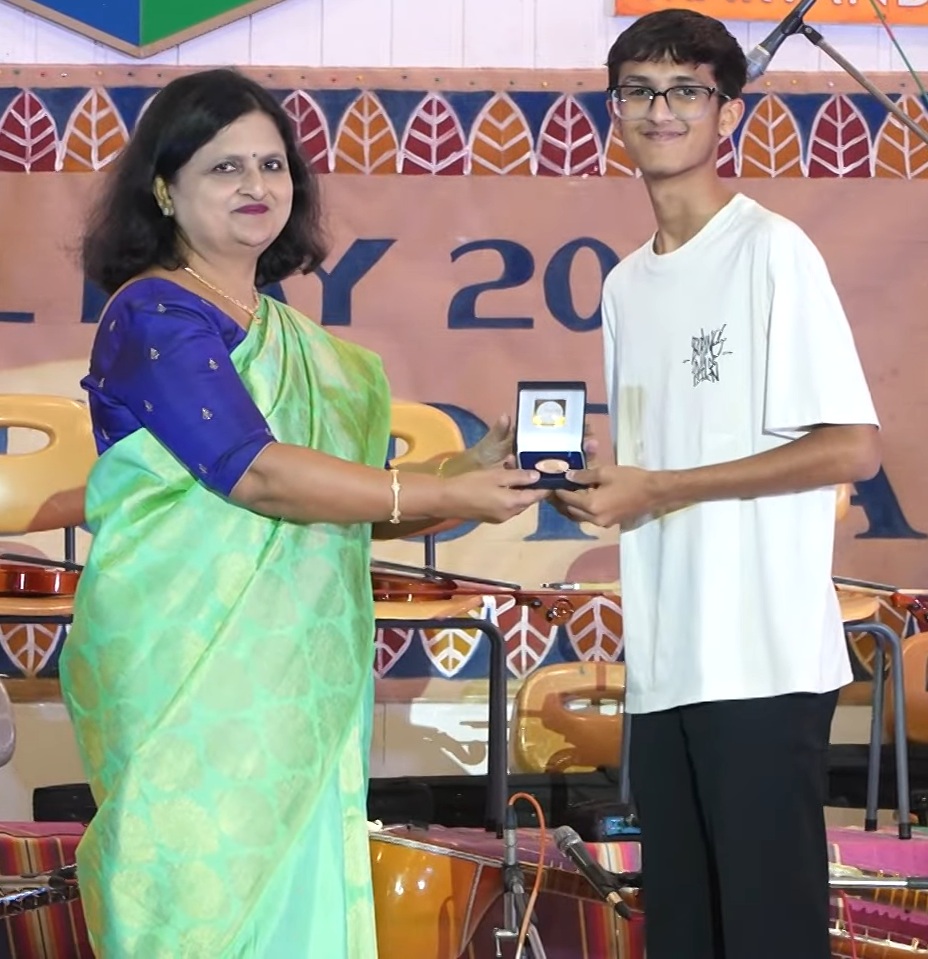
A King Constantine Medal Story: Rishi Bagri, Sarala Birla Academy, India
When Rishi Bagri, a student at Sarala Birla Academy in Bangalore, India, began to notice the growing problem of electronic waste around him, he chose not to ignore it. Instead, he responded with inventiveness and purpose, creating a practical solution rooted in community action. For this work, he was awarded his school’s King Constantine Medal.
“Growing up in Bangalore, I was always surrounded by technology, but I was also surrounded by the waste it leaves behind. Broken phones, old chargers and unused gadgets were often stored away in cupboards or thrown out without much thought about where they ended up. When I learned more about the environmental impact of e waste, it began to trouble me that something so harmful was treated as an afterthought. That was the moment the idea for E Karma began to form.
“I wanted to create a simple system where people could dispose of their e waste responsibly and feel encouraged for doing the right thing. Connecting households to verified recycling companies and offering proportional discounts in return felt like a practical way to make sustainability accessible. What inspired me most was the belief that a small change in behaviour, supported in the right way, could make a real difference for a city I care deeply about.
“One of the biggest challenges was convincing people that e waste is not just clutter, but a serious environmental threat. Many households in Bangalore had never interacted with a recycling company before, so trust was a real barrier. We had to educate families, simplify the process and keep refining how we communicated. On the operational side, coordinating with recycling partners, ensuring transparency and managing logistics, while balancing school responsibilities, often felt overwhelming.
“What kept me going was seeing a gradual shift in attitudes. Families who were hesitant at first would get back in touch to ask when the next collection was happening. That willingness to change made every setback feel manageable and worthwhile.
“E Karma gave people a clear, convenient and meaningful way to act. Families who had never recycled e waste before became regular participants once they realised how simple the system was and how their contribution mattered. The discount model made sustainability feel fair and motivating. More importantly, the initiative sparked conversations within my community about responsible disposal, environmental awareness and the need to rethink our relationship with technology.
“I believe the project showed students and families that impactful ideas do not have to be grand to matter. They simply need to meet people where they are. Receiving the King Constantine Medal feels deeply personal because it affirms the belief that young people can create meaningful solutions to real problems. For me, this recognition is not just about the project itself, but about the values behind it, the community that supported it and the city that shaped me.
“The medal reminds me that service combined with inventiveness can lead to genuine change, and that the work should not end here. It inspires me to keep building ideas that uplift communities and to carry the spirit of Round Square into everything I do next. If there is one thing E Karma has taught me, it is that change begins when you refuse to accept a problem simply because it feels normal. Bangalore showed me that progress and responsibility must grow together, and I hope my story encourages other students to look closely at the world around them and trust that their ideas, however small they may seem at first, can create real impact.”
Four steps to consider if you are inspired by Rishi and his work with e waste.
1. Identify a real problem
Look closely at your community or surroundings and notice issues that are often overlooked. Understand why they matter and think about the impact solving them could have. Start with something tangible and meaningful.
2. Design a simple, practical solution
Focus on creating a system or approach that people can easily engage with. Consider ways to make participation convenient, motivating, or rewarding, so others want to take part.
3. Test, refine, and communicate
Be ready to face resistance or challenges. Educate others, simplify your message, and adapt your approach based on feedback. Persistence and clear communication are key to gaining trust and support.
4. Build community involvement
Encourage collaboration, whether with peers, families, or local organisations. The broader the community engagement, the more lasting the impact. Celebrate small wins to keep momentum going.