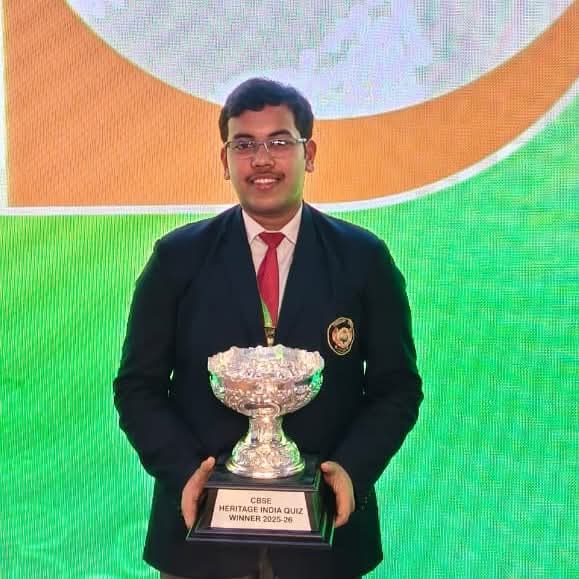
A King Constantine Story – Aditya Jaiswal, Sunbeam School Lahartara, India
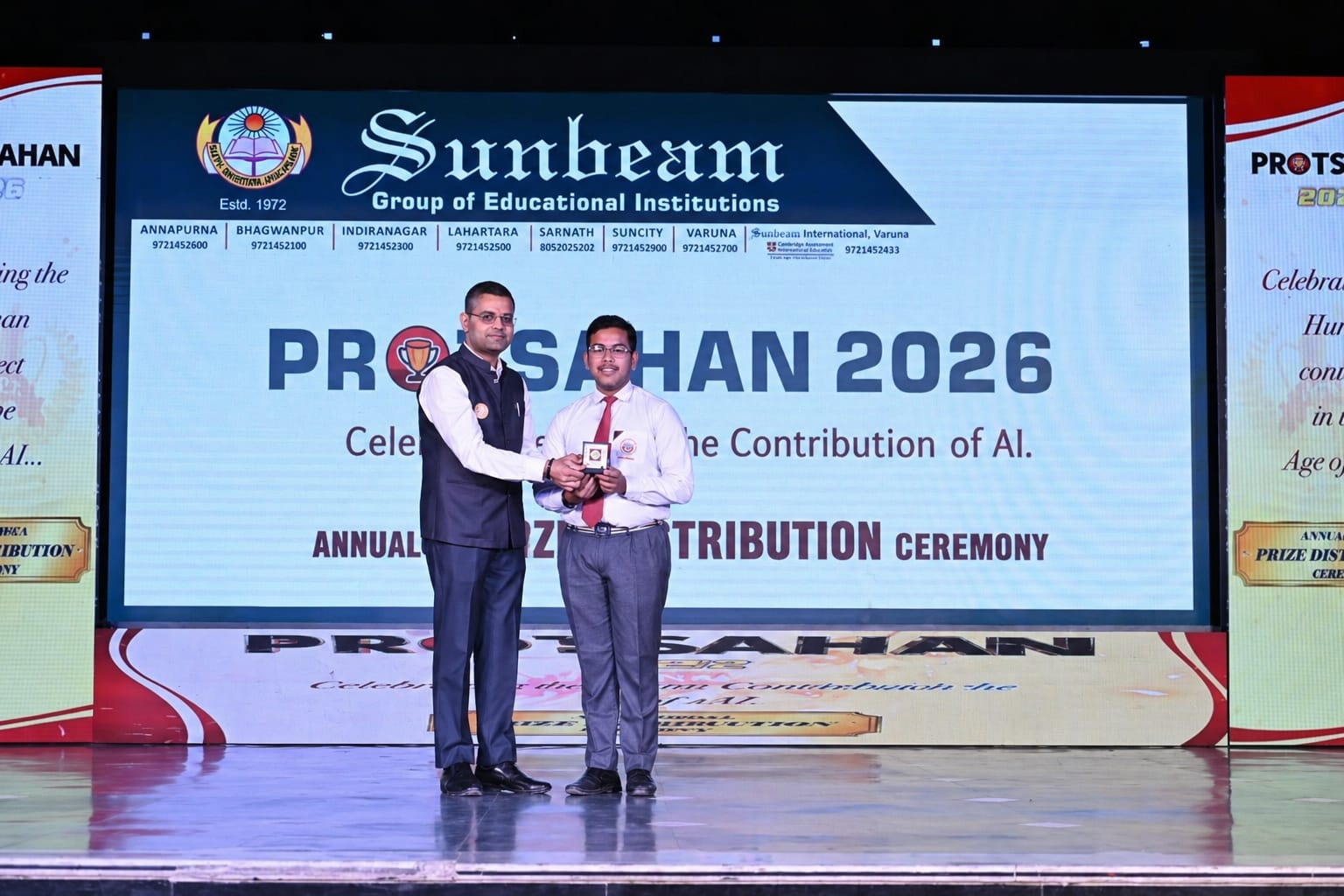
Aditya Jaiswal, a student at Sunbeam School Lahartara in India, was awarded his school’s King Constantine Medal for his leadership as Head Boy and President of Synapse: The Sunbeam Lahartara Quiz Club. Through his leadership, Aditya focused on creating a culture where students felt encouraged to participate confidently, take ownership of their growth, and pursue excellence collectively rather than individually.
“My leadership journey began through quizzing. Over the years, competitive quizzing taught me discipline, preparation, resilience, and the importance of consistency. But more importantly, it changed the way I understood leadership.
My drive to lead was never really about titles or recognition. It came from the realisation that a community’s culture is often shaped by the standards its leaders uphold and the systems they create. As an avid quizzer, I understood that personal victories are temporary, but building an environment where others can grow and succeed has a far more lasting impact.
To me, leadership became the responsibility of taking that internal drive for discipline and improvement and using it to encourage collective excellence within the student body. I wanted accountability, integrity, preparation, and participation to become everyday habits rather than expectations imposed from above.
One of the most defining experiences of my leadership journey came during a major school festival that I was helping oversee. Initially, my approach was to step back and allow different teams the freedom to manage their responsibilities independently while I supported strategically from the side. However, when unexpected technical and logistical problems threatened to disrupt the entire event, I realised that leadership sometimes requires stepping directly into the pressure alongside the team.
I worked closely with the technical crew and logistics teams to troubleshoot issues in real time and help stabilise the event. That experience taught me that leadership is not only about delegation and planning, but also about being willing to step forward when challenges arise and support others practically and calmly when standards are at risk.
A particularly meaningful turning point came even before I held any official leadership position. While I was in Grade 10, I noticed that many talented students avoided participating in quizzes because they believed they lacked access to the “right” resources or preparation methods. There was a perception that success belonged only to a small inner circle.
To address this, I taught myself how to design and develop the official Synapse Quiz Club website from scratch. I wanted to create a central platform where resources, research tools, activities, and opportunities were accessible to everyone equally. My goal was to make quizzing feel more open and less intimidating.
What impacted me most was seeing students who once considered themselves underqualified begin participating with confidence. Some later went on to lead their own initiatives using the same frameworks and preparation systems they had discovered through the platform. Today, the website attracts over 400 visitors each week from schools both within and beyond India. For me, this was one of the clearest examples of how leadership can create structures that continue helping others long after the original idea is launched.
Looking back, one of the most emotionally significant moments of my journey came during the final internal tournament I hosted as President of Synapse. The event took place in the same hall where, twelve years earlier, I had participated in my first quiz as a young student. During that final tournament, I watched younger students who had once been too intimidated even to attend quiz sessions confidently competing against experienced senior students. They were applying the same preparation methods, research habits, and strategic thinking that I had spent years developing myself. For the first time, I realised that leadership was no longer about my own performance. I was no longer the student standing at the buzzer focused only on winning. Instead, I saw the deeper impact of creating an environment where others felt capable, prepared, and confident enough to challenge themselves fully.
That moment changed my understanding of success. I realised that the most meaningful legacy is not personal achievement alone, but building systems and opportunities that allow others to discover their own potential.
Receiving the King Constantine Medal is a meaningful reflection of this journey. It reinforces my belief that leadership is not simply about holding responsibility, but about contributing to a culture where others feel empowered to grow, participate, and lead in their own way.”
Four steps to build a culture of excellence
- Create systems that help everyone participate: Leadership is not only about motivating people, but also about removing barriers. Think about what tools, resources, or structures could help others feel more confident and included from the start.
- Balance independence with support: Give teams ownership of their work but stay ready to step in when challenges arise. Strong leadership means knowing when to guide from a distance and when to work alongside others directly.
- Focus on helping others grow, not just achieving personally: Individual success is temporary but helping others develop confidence and capability creates a longer lasting impact. Encourage people to believe that improvement is possible for them too.
- Build a culture that can continue without you: The strongest leadership creates something sustainable. Aim to leave behind habits, systems, and opportunities that continue helping others long after your own role ends.