
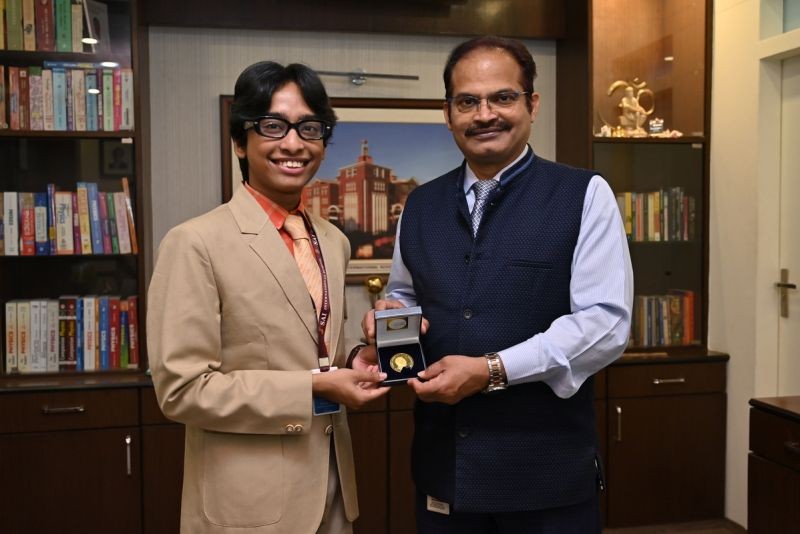
A King Constantine Medal Story: Tarun Tapan Bhuyan, SAI International School, India
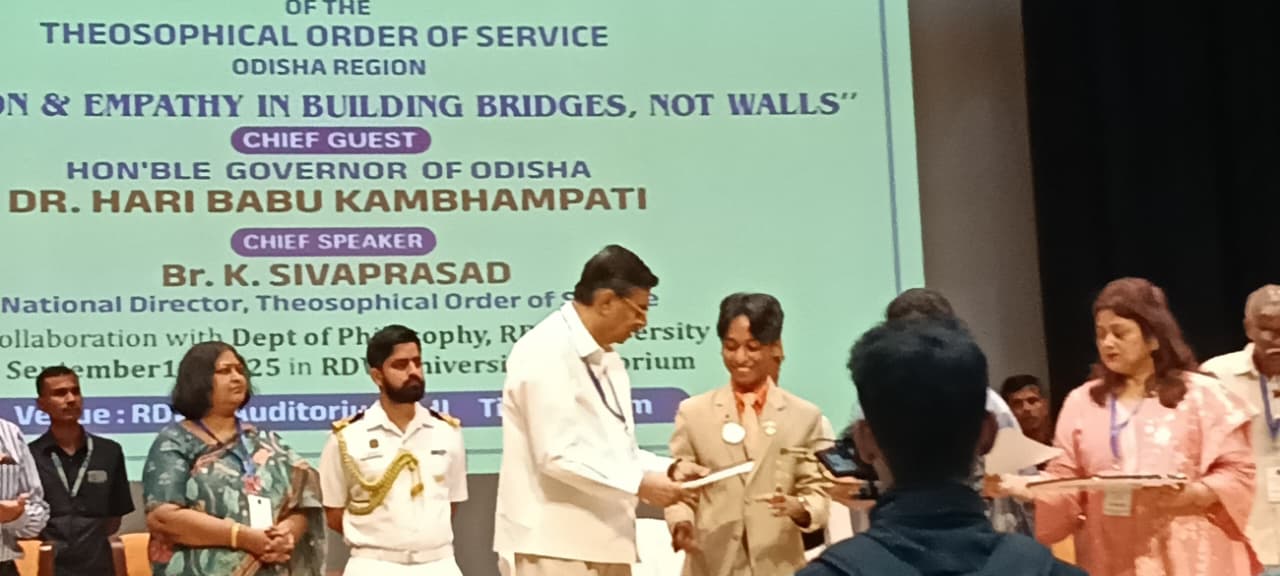
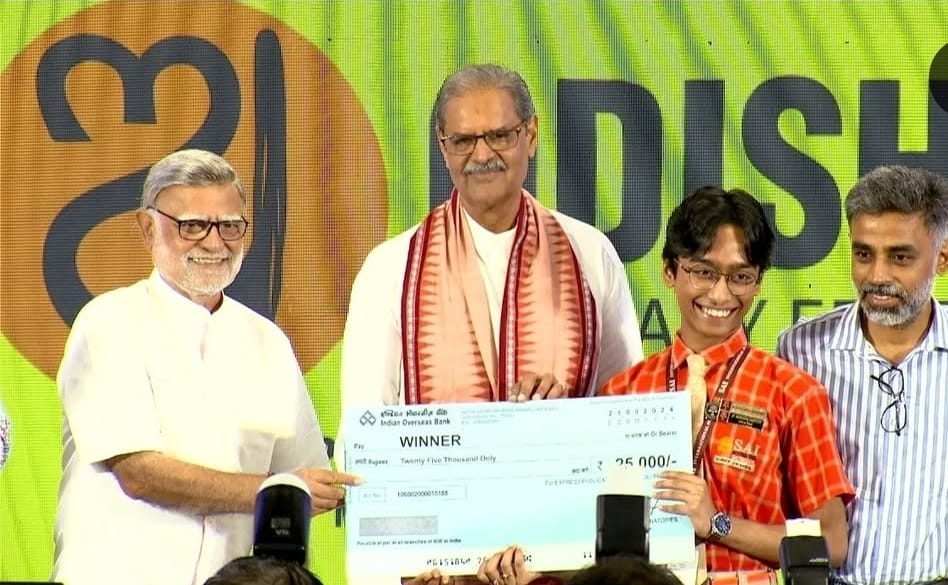
Tarun Tapan Bhuyan, a student at SAI International School in Bhubaneswar, India, was awarded his school’s King Constantine Medal in recognition of the way he has used communication to amplify student voices and connect local action with global conversations. Through climate advocacy, youth journalism and student leadership, Tarun has worked to ensure that young people are not only part of important discussions, but are helping to shape them.
“For me, the Round Square IDEALS have never been abstract concepts. They have been a compass guiding my journey as a student and aspiring global citizen. Receiving the King Constantine Medal feels less like a destination and more like a reflection of a journey spent trying to translate those values into meaningful action.
My journey began with a simple poetry competition in Bhubaneswar, which showed me that a single voice, when used with purpose, can create ripples of change. I was further inspired by what I describe as the unheard whispers of agony in our global ecology, a theme I explored in my essay Why the Trees Whisper. This motivation has shaped my work as a columnist, where I aim not just to collect accolades, but to show that young people are active participants in global conversations.
As National Team Coordinator for the Open Dialogues on Climate Change, I helped lead our work on the Eco Investment in Arid India project. One of the biggest challenges we faced was not only the complexity of the research, but ensuring that our youth led team remained credible among global stakeholders. The selection process was rigorous and focused on ecological understanding.
To overcome this, I focused on strengthening our communication and collaboration, ensuring that our work demonstrated the sociological depth needed for global policy discussions. As a result, we became the only team from India to complete the project, which was presented at COP29 in Azerbaijan.
Communication has also shaped my work within school. As Chairperson of the Student Committee and a Round Square Student Representative, I represent a community of more than 4,500 students. Through organising Postcard exchanges and international conferences, I have helped connect students across more than fifty countries.
A key example of impact has been the founding of the One Perspective Coalition, an international platform that has brought together eighty seven young changemakers from fifteen countries to advocate for press freedom. Within my own school, I have also co led one of the largest school level cultural festivals in India. This created what I would describe as a nurturing environment where students felt empowered to find their own voices through journalism and advocacy.
Beyond school, I have engaged in discussions with civic leaders, including a meeting with the Commissioner of Police in Bhubaneswar and Cuttack. These experiences have shown me that communication is not just about speaking, but about listening and building understanding across different perspectives.
Receiving the King Constantine Medal is deeply meaningful because it recognises the power of communication as a tool for change. Every article, project and initiative has been an attempt to ensure that student voices are heard and valued.
For me, communication is about more than expression. It is about creating dialogue, building partnerships and demonstrating that young people are not only the leaders of tomorrow, but contributors to the decisions being made today.”
Four Steps to Communicate for Impact like Tarun
1. Start with a purpose, not just a platform
Effective communication begins with a clear intention. Focus on the issue you want to address and the change you want to contribute to, rather than the recognition it might bring.
2. Amplify voices, not just your own
Use communication to bring in diverse perspectives, especially those that are often unheard. Strong ideas gain influence when they represent more than one viewpoint.
3. Build credibility through clarity and depth
Whether speaking, writing or presenting, ensure your ideas are well researched and clearly expressed. Credibility comes from showing both understanding and perspective.
4. Turn communication into action
Communication should lead somewhere. Use it to create dialogue, build collaborations and drive tangible outcomes, whether that is a project, initiative or wider engagement.